Solutions
Risk management - OPTURE ERM for smart risk management
From risk accounting to risk management – take your risk management to a new level now. OPTURE ERM is the technologically leading software solution.
Technology leaders in the ERM
This is how efficient risk management (ERM) works
With the OPTURE ERM Modern risk management is achieved through clear structures, reliable data, and automated processes.
- Modern look and feel
- Intuitive usability
- Technologically leading
OPTURE ERM Smart
With OPTURE ERM Smart it succeeds you The compact and cost-effective online Introduction into risk management with the possibility of easy and Seamless upgrade about OPTURE ERM Basic and OPTURE ERM Advanced. The smart solution for ERM beginners and small organizations.
-
Rollable and mandantable access rights
-
Automatic release procedure
-
Automatic data consolidations
-
Automatic email notifications
-
Intuitive online usability

OPTURE ERM Basic
OPTURE ERM Basic Includes all functions and features of OPTURE ERM Smart.
That complete risk management system with everyone Workflows, Functions and features with a high degree of automation, more secure documentation and more efficient risk management.
-
Fully audit- and revision-proof documentation
-
Advanced evaluation methods with multiple analysis methods
-
Automated workflows, audit trail, and access rights
-
Comprehensive reporting and dashboard features
OPTURE ERM Advanced
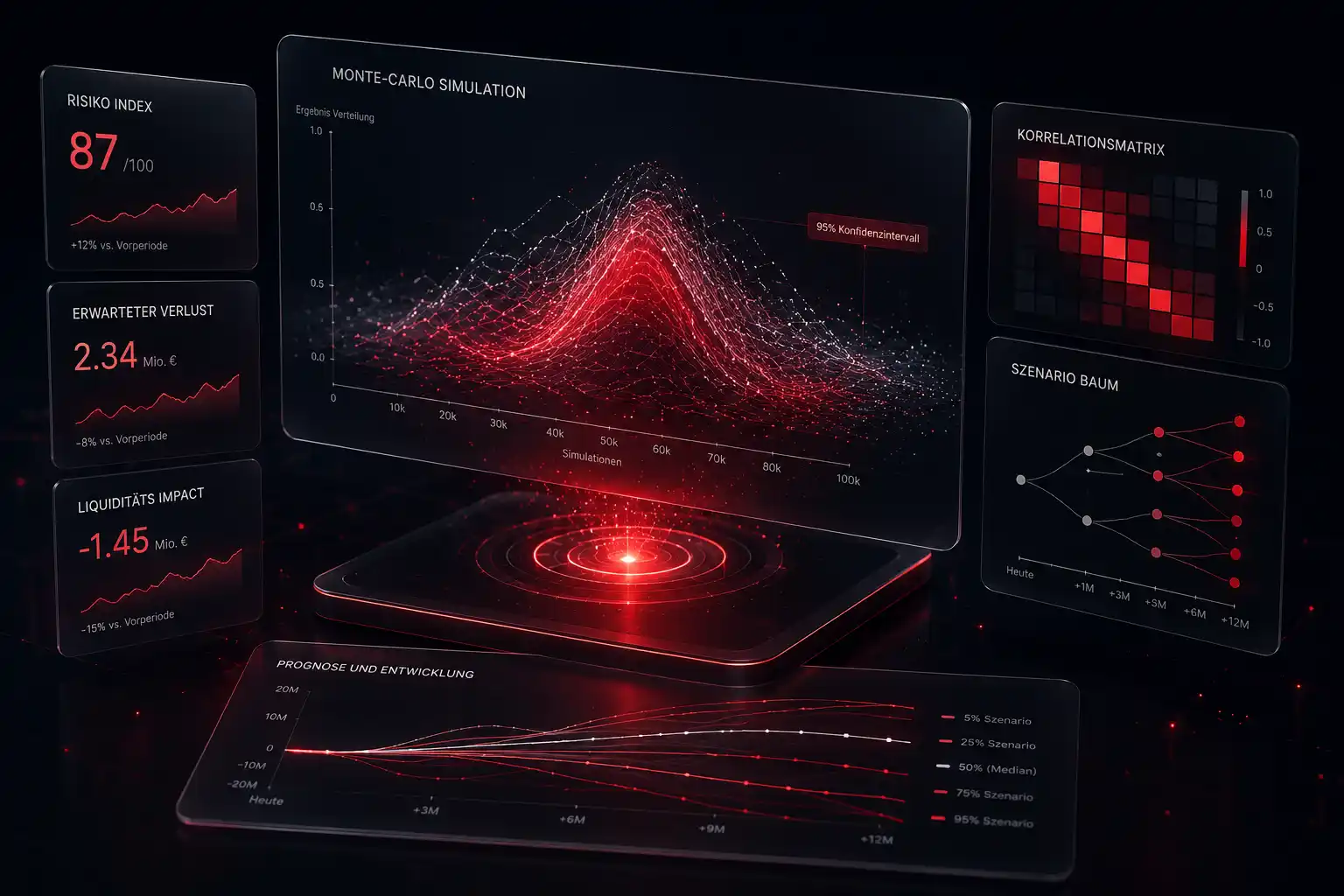
OPTURE ERM Advanced Includes all functions and features of OPTURE ERM Basic. Use professional Risk management Methods and models, With maximum analytical depth, the Risk Engine, and High performance Monte-Carlo simulator. Management under risk-return aspects.
-
Simulation of all risks with all correlations
-
Automatic calculation of the correlation matrix and KRI
-
High-performance MC simulator with >100 million simulations
-
Use of professional RM methods and models
Excel is out - OPTURE is in
Digitalization and automation - up to 60% cost savings
Automated processes, a central data base, online data entry and efficient dashboards ensure faster decisions and significantly reduce the effort compared to Excel.

Automation
Automated analyses and workflows replace manual tasks and reduce sources of error. Risk managers and User This significantly saves time and allows them to focus on content, data quality, analysis, and control.
Professionalization
With OPTURE ERM clear, standardized processes and best practices are followed to ensure uniform, comprehensible risk management throughout the entire organization. This increases the quality of assessments and the reliability of decisions.
Unified data base
All risks, measures, and evaluations are presented in a centralized, consistent data model – without Excel breakdowns or redundant information. This creates complete transparency and enables enterprise-wide analyses in real time.
Institutionalization
With OPTURE ERM Risk management is embedded as a fixed structure with recurring processes within the company – with clear responsibilities, uniform methods, and workflows. This makes ERM a fixed Part of corporate governance.
audit compliance
Every change, evaluation and decision is automatically documented and is always fully traceable. This ensures auditability, regulatory compliance and transparency. complete history of all risk processes for internal and external audits.
Data import and export
Users can easily import their risk data into OPTURE via xlsx and csv files and export it back out in file formats such as xlsx, csv, html, and pdf, to avoid manual data transfers. extensive data sets to avoid.
customer stories
Use Cases / Practical examples
This reduces the reporting workload

„This is how you manage risks across the entire group“
Risks in companies do not arise in isolation but across departments, locations, and business areas.. This is where the challenge lies: risks are often known – but rarely consolidated., comparable or Strategically controllable. With OPTURE ERM software, companies are creating the foundation...
USE CASE
How to manage risks across the entire group
Integrated, transparent, effective
In companies, risks arise not in isolation but across departments, locations, and business areas. This is where the challenge lies: risks are often known, but rarely consolidated, comparable, or strategically manageable.
With the OPTURE ERM Software Companies create the The basis for uniformly and consistently capturing, evaluating, and automatically consolidating risks, as well as for targeting and controlling them systematically across all organizational units.
Why corporate-wide risk management?
Risks today operate in a networked manner: supply chains, IT systems, regulatory requirements, ESG standards, compliance risks, or geopolitical influences. Individual Excel spreadsheets or local risk registers are no longer sufficient.
Companies need a solution that:
- He standardizes the risks
- Data consolidated
- Making interactions visible
- Controls measures across the group
- Decisions are supported by data-based reasoning
The Use Case: This is how group-wide risk management works
1. Unified recording of all risks across the entire group
All areas, from production to IT to compliance, capture risks using a uniform standard. This creates comparability and prevents information gaps.
2. Automated evaluation and scenarios
A central model assesses risks according to the probability of occurrence, Damage amount, early warning indicators, as well as scenarios with Min, Mode and Max. This creates an objective, reliable risk profile.
3. Real-time consolidation and aggregation
All risks are automatically consolidated, grouped, and reported according to the Corporate logic aggregated. The result is a corporate-wide Risk exposure that is always up to date.
4. Action control across all units
Actions are planned centrally, implemented locally, and monitored globally. This creates a continuous control process that not only documents risks but actively reduces them.
5. Transparency for the Board of Directors, Audit Committee and Supervisory Boards
Dashboards show top risks, trend analyses, progress of measures, Exposure development and early warning signals. This provides management with a clear basis for decision-making without manual reports.
The added value for your company
- Group-wide transparency instead of local silos
- Automated consolidation instead of manual Excel aggregation
- Faster decisions through real-time data
- Higher resilience through active control of measures
- Audit-compliant documentation for revision, supervisory board and regulatory requirements
- Strategic control instead of pure risk assessment
Brief summary
Enterprise-wide risk management means understanding, networking, prioritizing, and effectively managing risks across all areas. This provides companies with the transparency, speed, and control capabilities that are crucial in dynamic markets.
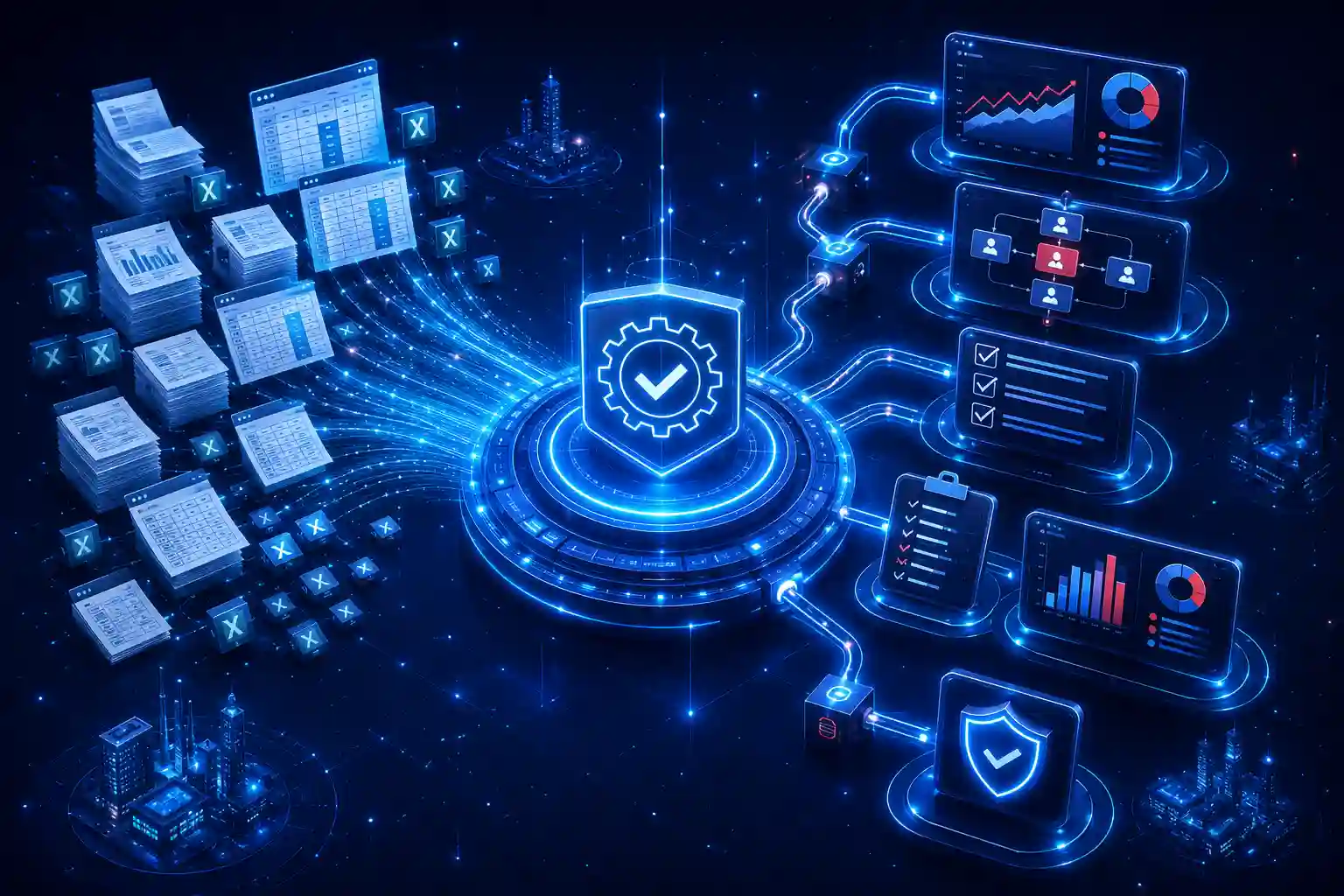
„This is how you automate your risk management“
Risk management today is more than just updating a risk list annually. Companies must continuously monitor risks., identify and target early – across all areas. But in practice, manual processes, Excel lists, and time-consuming adjustments often dominate. In OPTURE ERM…
USE CASE
How to automate your risk management
Efficient, consistent, future-proof
Risk management today is more than just updating a risk list annually. Companies must continuously monitor risks, identify them early, and target their management across all departments. However, in practice, manual processes, Excel spreadsheets, and time-consuming reconciliations often dominate.
OPTURE ERM creates through the automation of Risk management offers a decisive advantage: risks are automatically captured, evaluated, monitored, and controlled without additional effort for the departments involved and with maximum transparency for management.
Why automation?
Modern companies operate in dynamic, global markets. Supply chains and complex IT environments. Risks change daily; manual processes are no longer sufficient.
Automation means:
- less effort
- more speed
- Higher data quality
- better decisions
- Audited traceability
The Use Case: How to automate your risk management
1. Automated risk assessment
Risks are no longer reported manually but are derived automatically from processes, systems, and indicators. Early warning signals, thresholds, and external data sources ensure that risks become immediately visible.
2. Intelligent evaluation and updating
Ratings are performed algorithmically, based on historical data, Trend analyses, scenarios, and automated probability and damage models.
This ensures that each rating remains up-to-date, objective, and comparable.
3. Automated consolidation and reporting
All risks are automatically aggregated, prioritized, grouped, and presented in dashboards.
Management receives real-time transparency without anyone having to create reports manually.
4. Action control with workflow automation
Actions are automatically assigned, scheduled, monitored, and escalated.
This creates a continuous control process that not only documents risks but actively reduces them.
5. Permanent monitoring and alerts
Automated monitoring mechanisms detect deviations, new ones Risks, critical developments and overdue measures.
Alerts inform the responsible parties immediately before a risk escalates.
The added value for your company
- Less manual work, more focus on decisions
- Higher data quality through automatic updating
- Faster response times thanks to real-time monitoring
- Consistent evaluations across all areas
- Audit-ready documentation without additional effort
- Demonstrable effectiveness through automated control measures
Brief summary
Automated risk management means: identifying, assessing and controlling risks automatically, intelligently and in real time at all times. Companies thus gain efficiency, transparency and control capabilities that are indispensable in modern organizations.
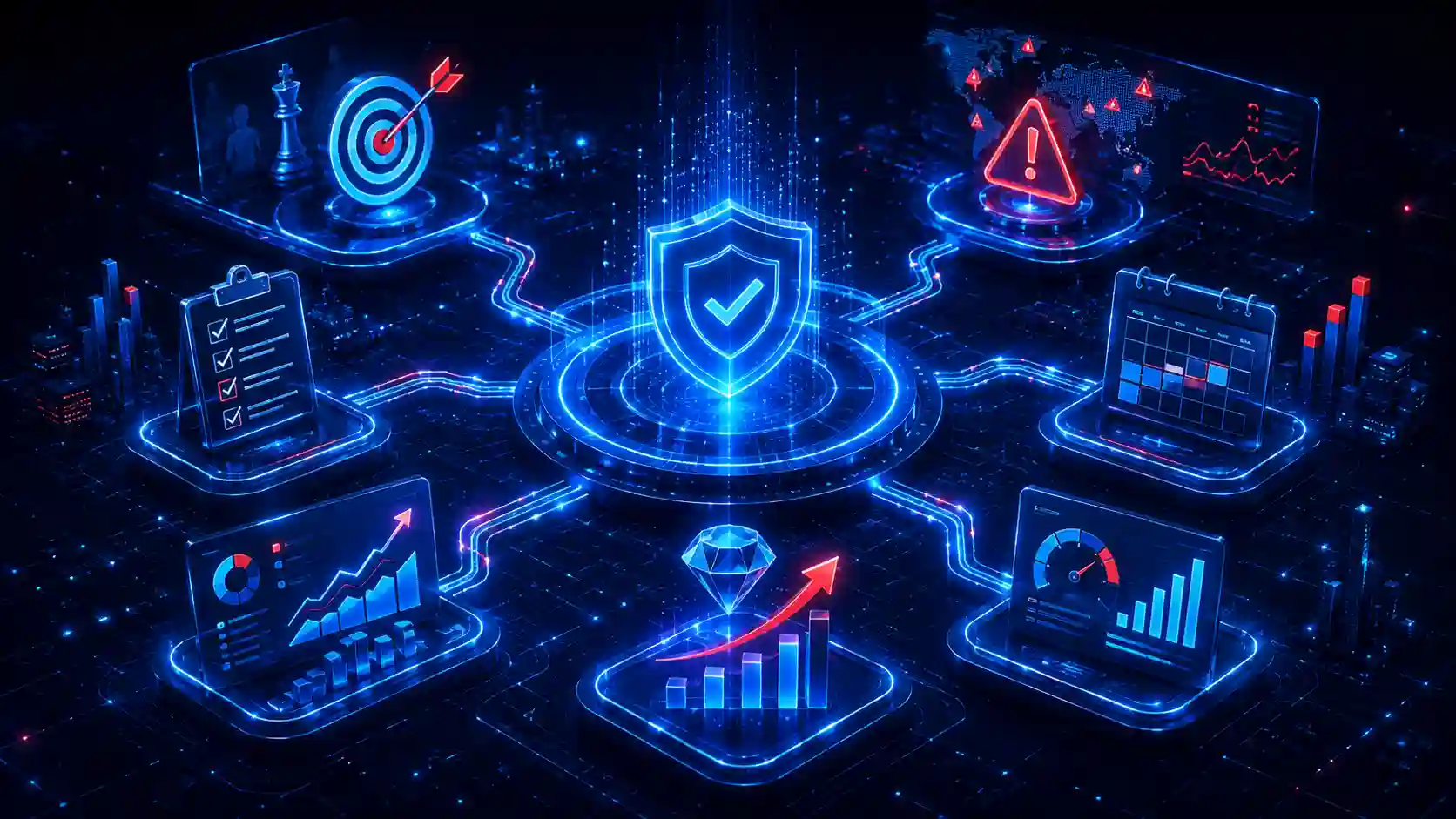
„This is how you generate added value“
Risk management today is much more than documenting uncertainties. Modern companies use risks as a strategic source of information, as an early warning system, and as a driver for better decisions. The crucial added value of OPTURE ERM arises when risks are not only captured but actively integrated into planning, control, and performance.
USE CASE
This reduces the reporting workload
Automated, consistent, audit-proof
Risk reporting is still associated with a high level of manual effort in many companies. Data is collected from various departments, Excel files, local risk registers, and reconciliation rounds. This takes time, increases the susceptibility to errors, and makes it difficult to have an up-to-date view of the risk situation.
With OPTURE ERM Companies are reducing their Reporting effort is significantly reduced. Risk data, assessments, measures, responsibilities, and changes are captured centrally, automatically consolidated, and presented transparently to management, audit, and oversight committees.
Why reporting automation?
Management, the board of directors, auditors, and regulatory authorities expect up-to-date, consistent, and understandable risk information. Manual reports are often too slow, error-prone, and difficult to version.
Automated reporting means:
- less manual consolidation
- a uniform data base
- Current dashboards instead of static reports
- audit-secure traceability
- faster management decisions
The Use Case: How to reduce reporting effort
1. Central recording of all risk data
Risks, assessments, measures, and responsibilities are captured centrally in a platform. This eliminates the manual collection of different files, versions, and local risk reports.
2. Automatic consolidation
All relevant risk information is automatically divided into categories, Consolidating companies, risk categories or corporate logic. This reduces the amount of voting required and ensures consistent results.
3. Unified evaluation logic
Standardized evaluation models result in comparable results Risk data. Probability of occurrence, damage level, scenarios and Action status is evaluated according to clearly defined rules.
4. Dynamic dashboards and management reports
Dashboards show top risks, trends, progress in measures, Risk exposure and changes in real time. Management reports can be created faster and updated at any time.
5. Automatic tracking of actions
Measures, deadlines and responsibilities are automatically monitored. Open points, overdue measures and critical issues are reported to the management. Developments are immediately visible.
6. Audit-proof documentation
Changes, reviews, approvals, and actions are documented in a comprehensible manner. This creates a reliable basis for revision, Examinations, Supervisory Board and regulatory requirements.
The added value for your company
- Less manual effort in report creation
- Automated consolidation instead of Excel aggregation
- Higher data quality through uniform evaluation logic
- Faster reports for the board, audit and supervisory committees
- Current dashboards instead of static snapshots
- Audit-proof documentation of all changes and measures
- More time for analysis instead of administration
Brief summary
Reduced reporting effort means: less manual work, fewer errors and more transparency. Companies gain with OPTURE ERM an up-to-date, consistent and reliable basis for management decisions, audits and strategic risk management.
Intelligent risk management
Intelligent analyses and state-of-the-art methods for modern risk management
From identification to reporting – all process steps, workflows, and analyses are integrated, automated, and fully auditable in a central system.
Risk identification
Risks are structuredly identified, categorized, and assigned unambiguous responsibilities.
Risk analysis
Causes, effects, scenarios and connections are systematically analyzed.
Risk assessment
Risks are evaluated, classified, and prioritized according to uniform criteria.
Risk aggregation
Individual risks are combined into a consistent overall picture of the risk exposure.
Risk management
Measures, responsibilities, deadlines, and escalations are centrally controlled.
Monitoring & Reporting
Dashboards, KRIs and reports show developments, trends and areas for action in real time.
Your competent partner
What makes OPTURE ERM unique - modern technology and professional models & methods
Innovative technology and intelligent methods – OPTURE developed Risk management sets standards.
Technology & Automation
OPTURE ERM automates risk reviews, assessments, reminders, Escalation and reporting processes. This reduces manual work for companies and creates a consistent, auditable ERM process.
Models & Methods
Advanced evaluation logics, quantitative risk models, and Monte Carlo simulations enable reliable risk analyses instead of pure probability calculations. Gut feeling assessments. Risk-return control using key risk indicators.
Transparency & Early Warning
Real-time dashboards, KRIs, trend analyses and early warning signals show at all times where risks arise, measures are inefficient or stagnate, or limits, such as risk limits, risk tolerance, etc., are exceeded.
RegOS platform & expert knowledge
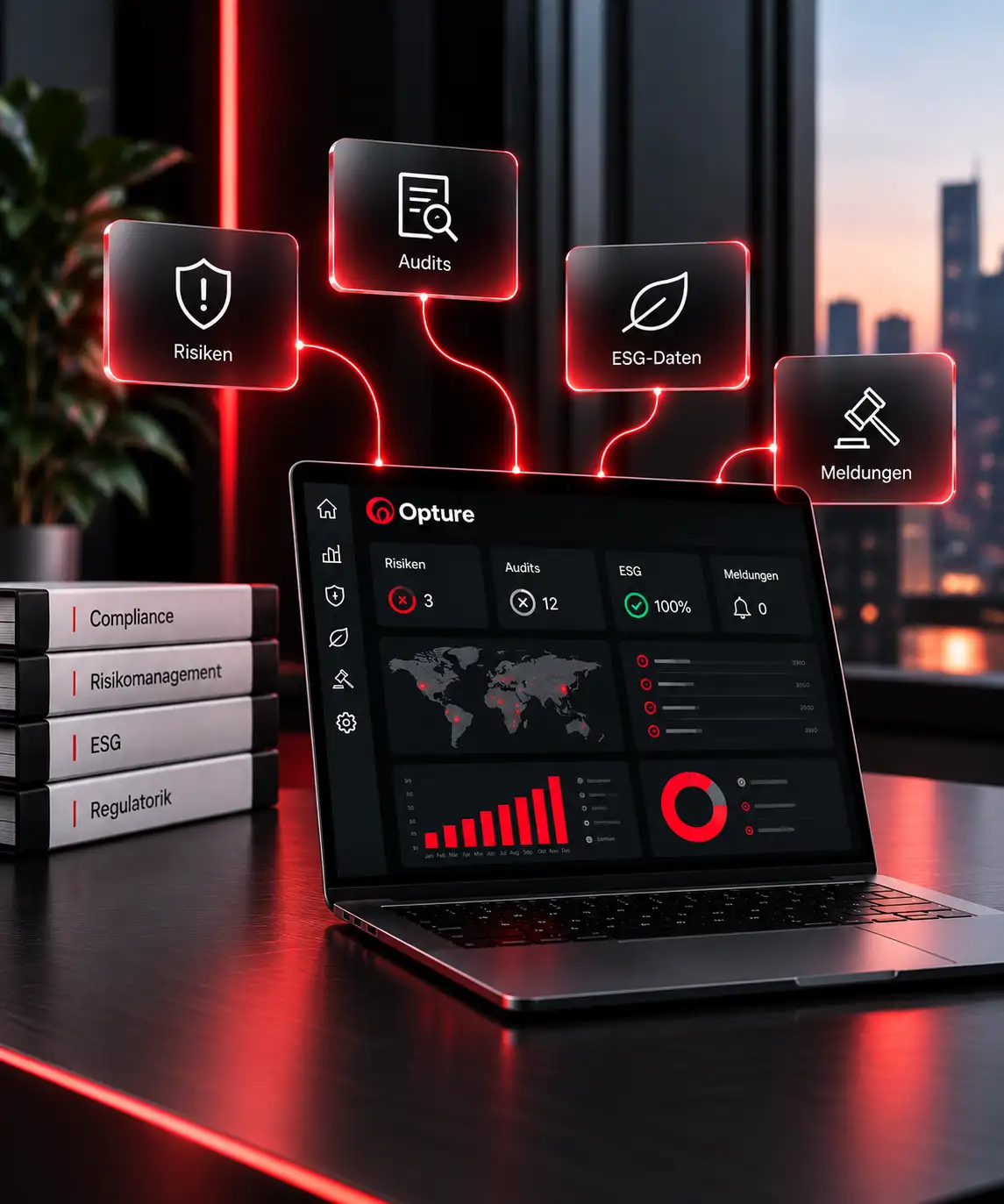
OPTURE ERM is part of the integrated RegOS platform and connects risk management with compliance, IKS, ESG, AI Act, ISMS/NIS2 and other governance processes. The platform ensures data consistency and displays all regulatory issues at a glance.

Risk management on point
Scalability & flexible configurability without breaking the system
OPTURE ERM It grows with the maturity of companies’ risk management – from simple entry-level options to highly advanced simulations. Companies can add or disable individual content, functions, and features in the software, depending on the maturity level. Extensions such as IKS, Compliance, ESG or SCDDA They can be added at any time without data migration or additional tools. Other providers often encounter technical or structural limitations in this regard.
Customers
From international large corporations
up to innovative SMEs










Everything you need to know about the OPTURE ERM – explained in a nutshell
Our FAQ provide quick, understandable answers to the most important questions about OPTURE ERM Software, its functions and the added value for your company.
How is the OPTURE ERM software integrated into the OPTURE RegOS platform?
OPTURE ERM is fully integrated into the OPTURE RegOS (Regulatory Operating System) The platform is embedded and uses the same central data base as all other OPTURE modules as well. This allows risk‑based, Compliance‑, Audit‑, ESG‑ and security processes seamlessly integrate with each other, without media gaps or redundant data. The risks and control measures from other regulated subject areas can be seamlessly integrated into OPTURE. ERM Software is adopted, consolidated, and reported on (redundant collection is thus excluded). Companies manage all regulatory issues in a single system – consistently, integrated, and scalable.
What benefits does the OPTURE ERM software offer?
OPTURE ERM offers structured processes, automated workflows, and data retention that Excel fundamentally cannot provide. Risks are evaluated uniformly, centrally managed, and analyzed in real time – without manual files, version chaos, or error susceptibility. The result is professional, scalable risk management that massively increases transparency and efficiency.
How does the OPTURE ERM software support the automation of ERM processes?
OPTURE fully automates risk reviews, assessments, reminders, escalations, and reporting steps. This significantly reduces manual effort, and decision-makers work with constantly updated, consistent data. Automation makes ERM faster, more reliable, and significantly less prone to errors.
Which OPTURE ERM software is right for me?
OPTURE offers different ERM features – from simple entry-level options (OPTURE ERM Smart) up to advanced solutions with Monte‑Carlo simulation and Risk Engine (OPTURE ERM AdvancedCompanies choose exactly the functional level that suits their regulatory maturity and complexity. OPTURE ERM Products can simply be upgraded to a higher version and can also be individually configured and expanded at any time in terms of content.
OPTURE ERM Smart for beginners and small organizations that need a professional solution ERM software as a web application with expansion potential, at a “reasonable” price.
OPTURE ERM Basic for users who want to visualize the complete risk management process with all automation effects, combined with a flexibly configurable and infinitely scalable system with optional expansion capabilities.
OPTURE ERM Advanced For experts looking for professional ERM software, with Monte Carlo simulations for calculating KRI (Key Risk Indicators), such as VaR, Expected Loss, Conditional VaR, Sensitivity Analysis, Probability Distributions, etc. for individual risk portfolios or business units up to the individual risk level.
How does the OPTURE ERM software differ from other products and tools?
OPTURE ERM combines modern technology, high automation and a fully integrated OPTURE RegOS Platform – far beyond the classic GRCGo beyond tools. The software is based on decades of expertise and best practices from demanding industries. This makes it more technically deep, technologically more powerful, and significantly more efficient in everyday use than many competitors.
How quickly can the OPTURE ERM software be implemented and expanded?
The implementation is fast, efficient, structured, and with clear standard processes, depending on the complexity of the data or business structure, so that companies can start working productively quickly after 4-6 weeks. The standard processes are based on the practical experience of a large number of successfully implemented implementations over the last 25 years. Thanks to a modular architecture, additional topics such as IKS, Compliance, ESG, ISMS or AI Act add to it at any time without disrupting the system. The platform grows with the requirements – without additional tools, data migrations, or complexity.
What is risk management? A definition for companies
Risk management is the structured process for identifying, Analysis, evaluation, control and monitoring of risks. Companies use risk management to identify uncertainties early on, to transparently assess opportunities and risks and to make informed decisions.
Professional risk management does not view risks in isolation, but in conjunction with strategy, planning, liquidity, compliance, governance, and operational control. This creates a reliable foundation for the board, management, risk management, controlling, and supervisory bodies.
The risk management process
An effective risk management process follows a clear structure. What is crucial is that risks are not only documented but also regularly evaluated, controlled and reported on.
Identify risks
Risks are systematically identified and communicated to the relevant departments, Associated with processes, locations, or organizational units.
Analyzing risks
Causes, effects, dependencies and probabilities of occurrence are evaluated and put into a comprehensible context.
Evaluate risks
Risks are evaluated qualitatively or quantitatively, prioritized, and examined for their significance to strategy, results, liquidity, and risk-bearing capacity.
Managing risks
Measures, controls and responsibilities are defined, monitored and evaluated for their effectiveness.
Monitoring & Reporting
Risks, measures, key figures and changes are continuously monitored and reported transparently to management, the audit department and the supervisory committees.
Regulatory requirements and liability risks
For executives in the DACH region and many other countries worldwide, risk management is no longer just a voluntary governance exercise. Regulatory requirements, corporate governance, compliance obligations, and personal liability risks are increasing the pressure on organizations to have comprehensible, verifiable, and effective risk management systems.
Companies must not only know risks but also be able to demonstrate how they are assessed, controlled, and monitored. Audit-proof documentation, clear responsibilities, and reliable reports are therefore central components of modern enterprise risk management.
Qualitative vs. Quantitative Risk Management
Qualitative risk management often uses ratings such as low, medium, or high. This method is easy to understand, but it is difficult to apply to complex projects. Risk landscapes quickly reach their limits.
The central problem: Qualitative terms or isolated Percent values cannot be aggregated mathematically. Ten average risks can, when combined, pose an existential threat to a company without becoming visible as an existing threat in a classic risk map.
This also applies to continuously distributed market risks, which can have positive and negative effects due to their volatility. The average value may be low, while the range of fluctuations is very high.
Quantitative risk management begins right here. Using Monte-Carlo simulations Millions of potential The company’s future scenarios calculated. This results in bandwidths, Dependencies, extreme risks, and risk-bearing capacity are now clearly visible in a much more precise way.
The benefits of specialized risk management software
Professional enterprise solutions such as those from OPTURE AG are transforming Risk management from a bureaucratic duty into an active one Management, controlling and board-level control instrument.
Central database
Risks, measures, controls and reports are documented uniformly and evaluated consistently.
Automated processes
Workflows, consolidations, evaluations, and reports reduce manual work It increases the effort and the data quality.
Quantitative models
Simulations, scenarios, and risk aggregation enable reliable statements regarding risk tolerance.
Audit-proof documentation
Decisions, evaluations, and actions remain comprehensible, auditable, and reliable for auditing purposes.
Better decisions
Management and Board receive transparent risk information for Planning, control and strategy.
From reporting to control
Risk management is transformed from an administrative process into an active one. Control instrument.
Conclusion: Risk management as a control instrument
Modern companies require risk management that not only documents risks but also makes them usable for planning, control, and decision-making. Central data bases, automated processes, reliable analyses, and comprehensible reports are crucial.
OPTURE ERM helps companies manage risk in a way that goes beyond mere administration. To further develop the task into an integrated control instrument for the board, management and specialist departments.