Solutions
Supply Chain Law Software: Ensuring legal certainty through due diligence obligations
Turn the LkSG from a bureaucracy monster into a digital standard process. OPTURE LkSG manages your entire supply chain risk management – from abstract risk analysis to the legal complaint process to the BAFA report. Fully automated and seamlessly integrated into the RegOS platform.
Customer Benefit
This is how a modern and innovative supply chain compliance system works
OPTURE LkSG – Recognizing risks early, Intelligently control obligations and Reliably monitor suppliers – everything in a system.
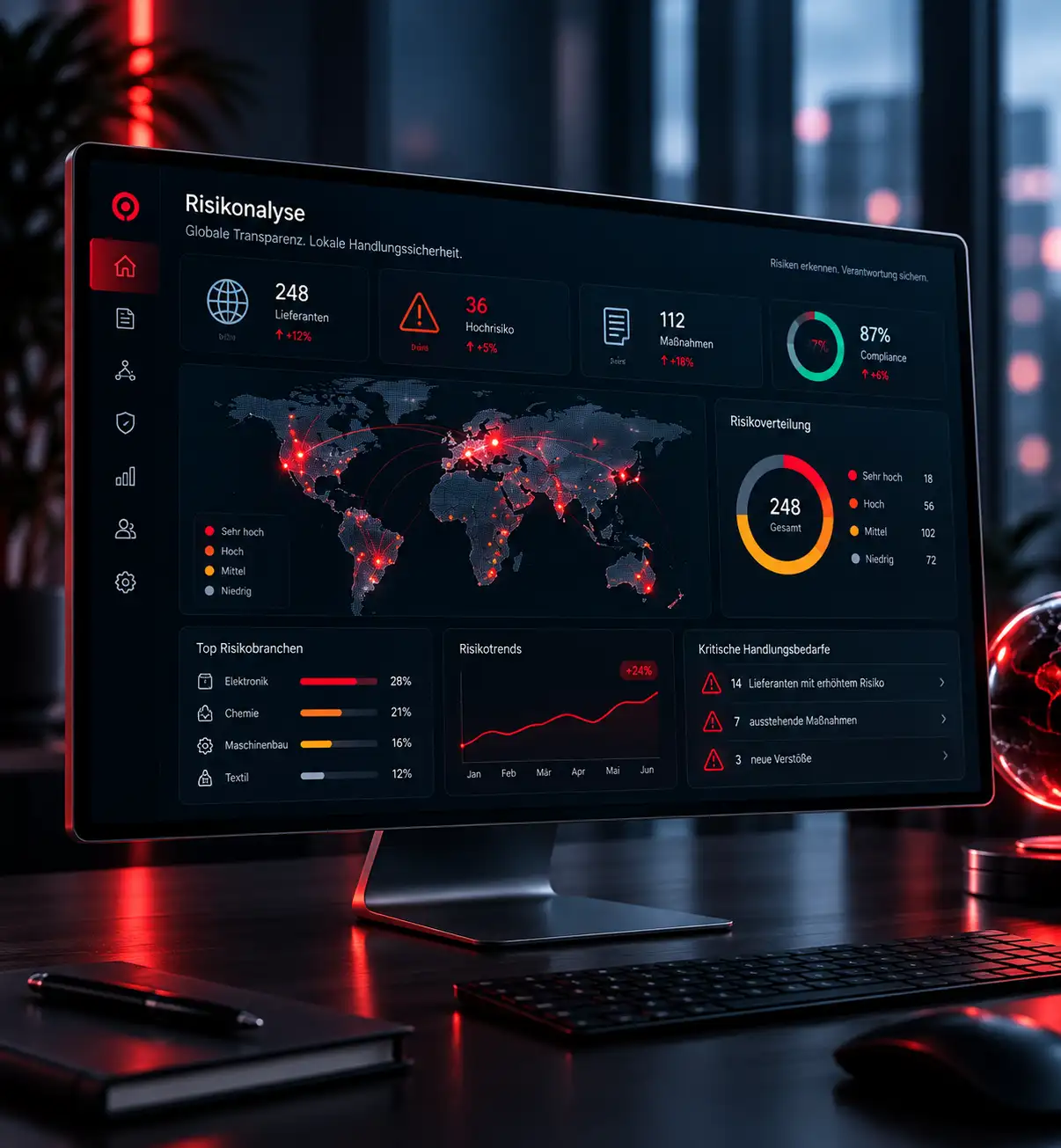
Abstract and Concrete Risk Analysis
OPTURE LkSG combines country-specific and industry-specific indices with the individual data of your suppliers. The system automatically calculates a valid risk profile for each supplier and prioritizes critical action needs.
- Automated risk detection
- Risk profile of Valide
- Prioritized measures
- Transparency in the supply chain
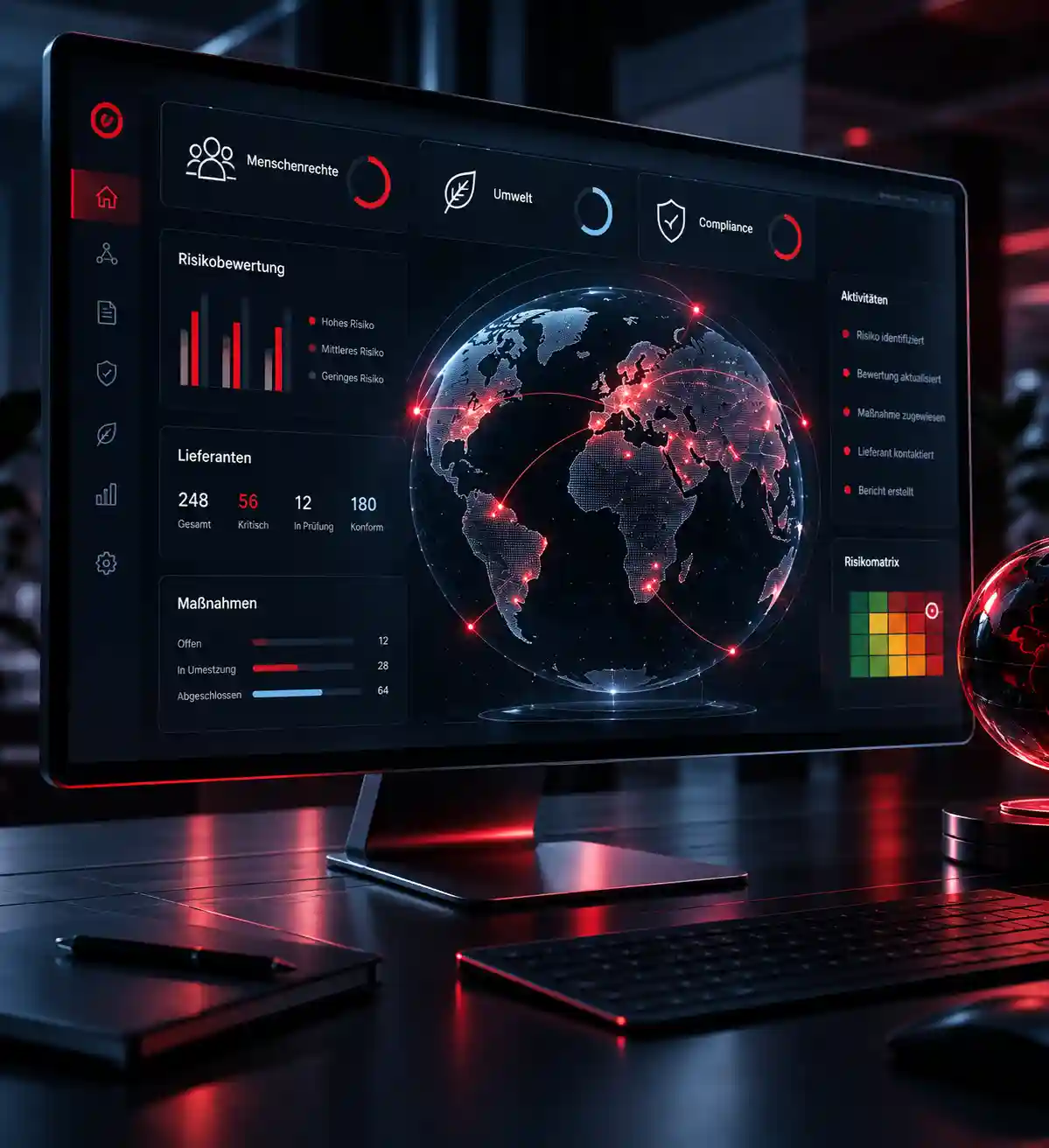
Automated, transparent risk and evaluation processes
Human rights, Environment– and Compliance– Risks are systematically evaluated, prioritized, and linked directly to actions. Supplier evaluations are conducted automatically, transparently, and in a comprehensible manner. This creates a consistent, risk-oriented view of the entire supply chain.
- Obligations and responsibilities
- Policies & Guidelines
- Monitoring & Reporting
- Integration in OPTURE Regos

Efficient processes with audit-proof documentation
OPTURE LkSG documents every action completely, irreversibly, and audit-proof. All processes follow clearly defined workflows – from risk identification to effectiveness control. This reduces manual effort, increases the quality of results, and meets the highest requirements for LkSG and ESG Reports.
- Risk profile & country assessment
- Self-declarations & questionnaires
- Audit & Monitoring
- Rating & Classification
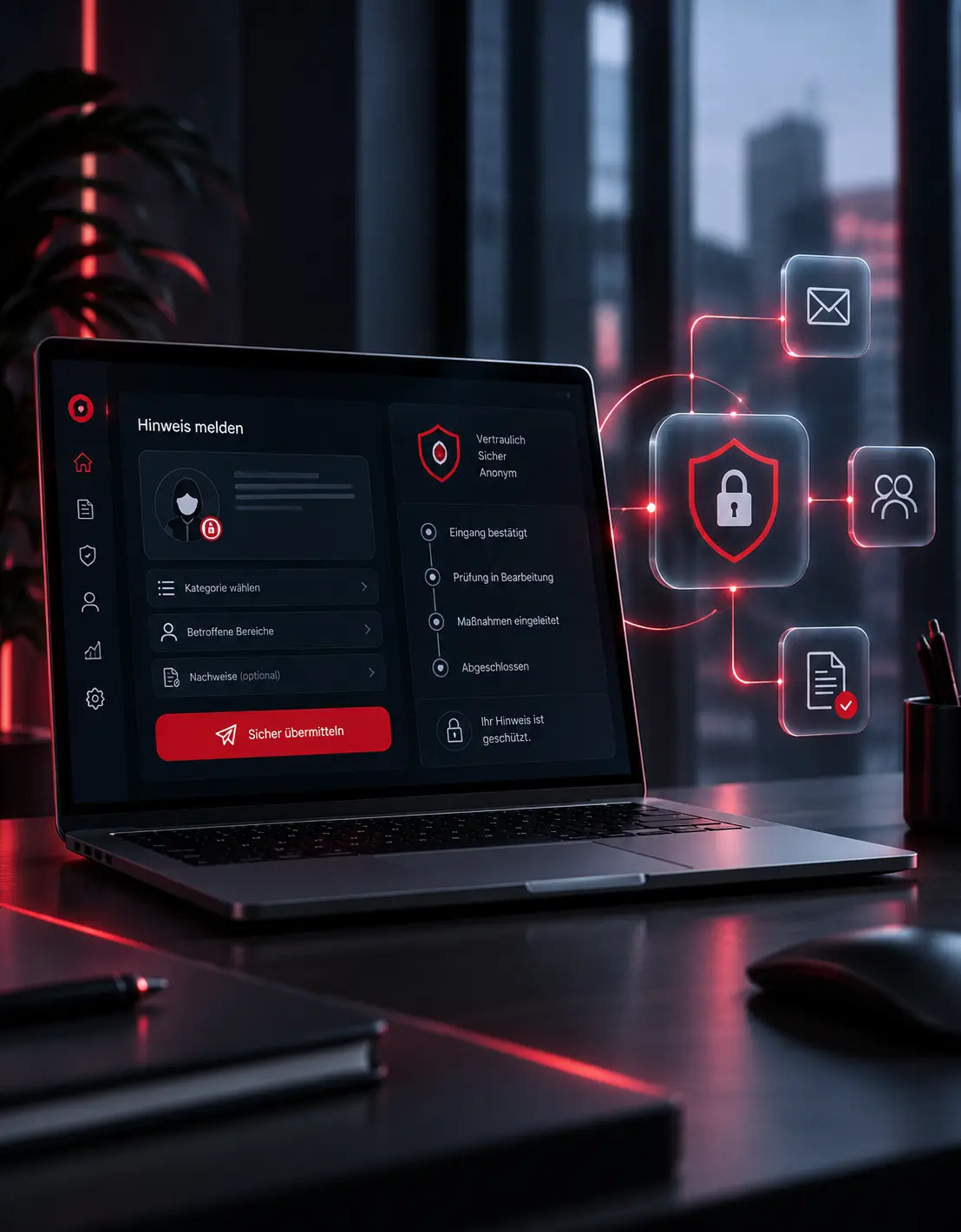
Legally compliant complaint procedure
The law requires a publicly accessible, barrier-free, and on request anonymous reporting channel for those affected along the supply chain. By linking it to the OPTURE whistleblower system (HGS) you fulfill this obligation out-of-the-box.
- Standardized process steps
- Automated tasks & escalations
- Audit trail & documentation
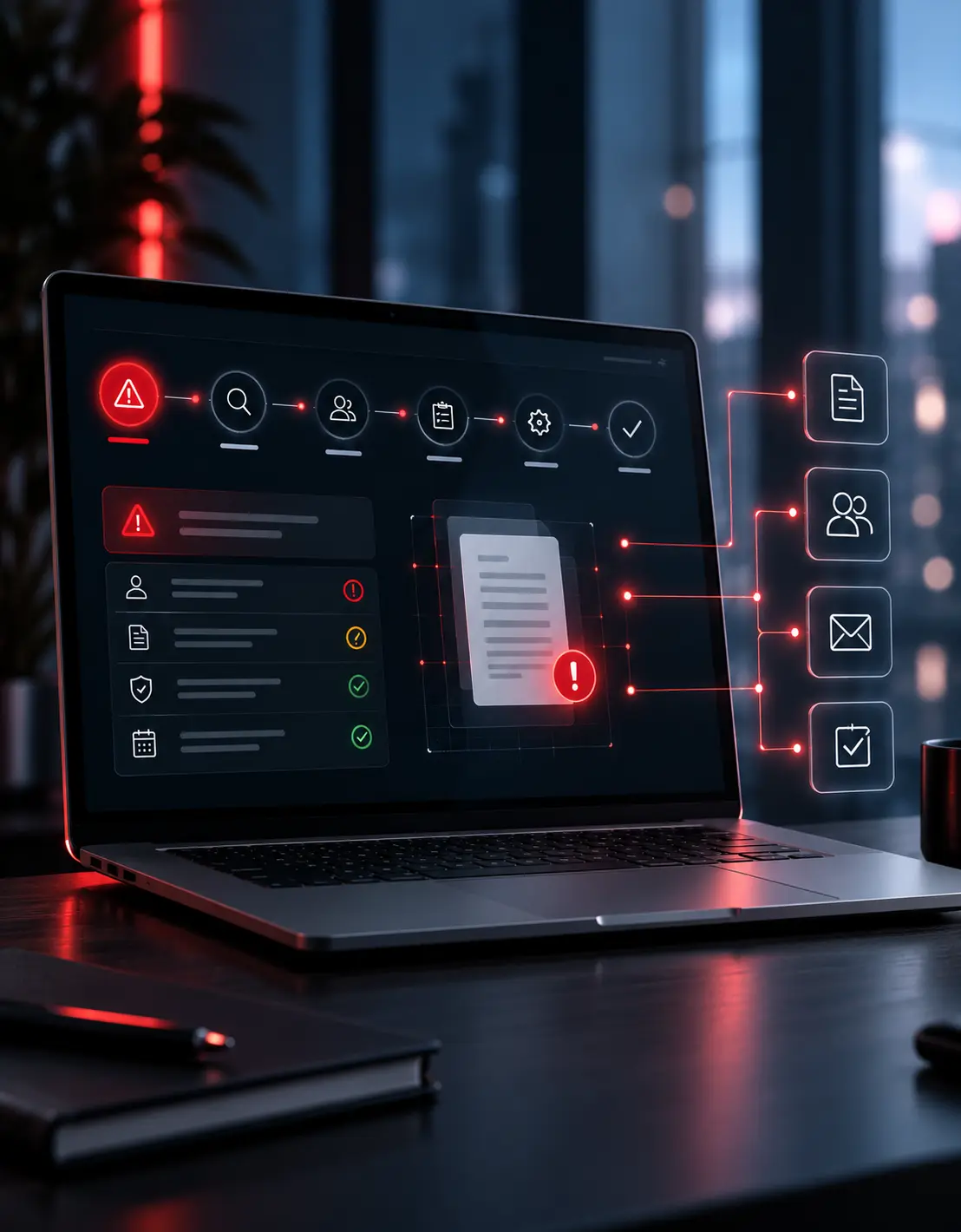
Preventive and remedial measures (CAPA)
If a supplier is found to be in violation (e.g., failure to comply with occupational safety rights), the system immediately triggers a predefined workflow. Responsibilities are assigned, measures are tracked, and their effectiveness is documented in a legally sound manner.
- Subsurface reporting channels
- Case management
- Protection of whistleblowers
- Documentation & Reporting
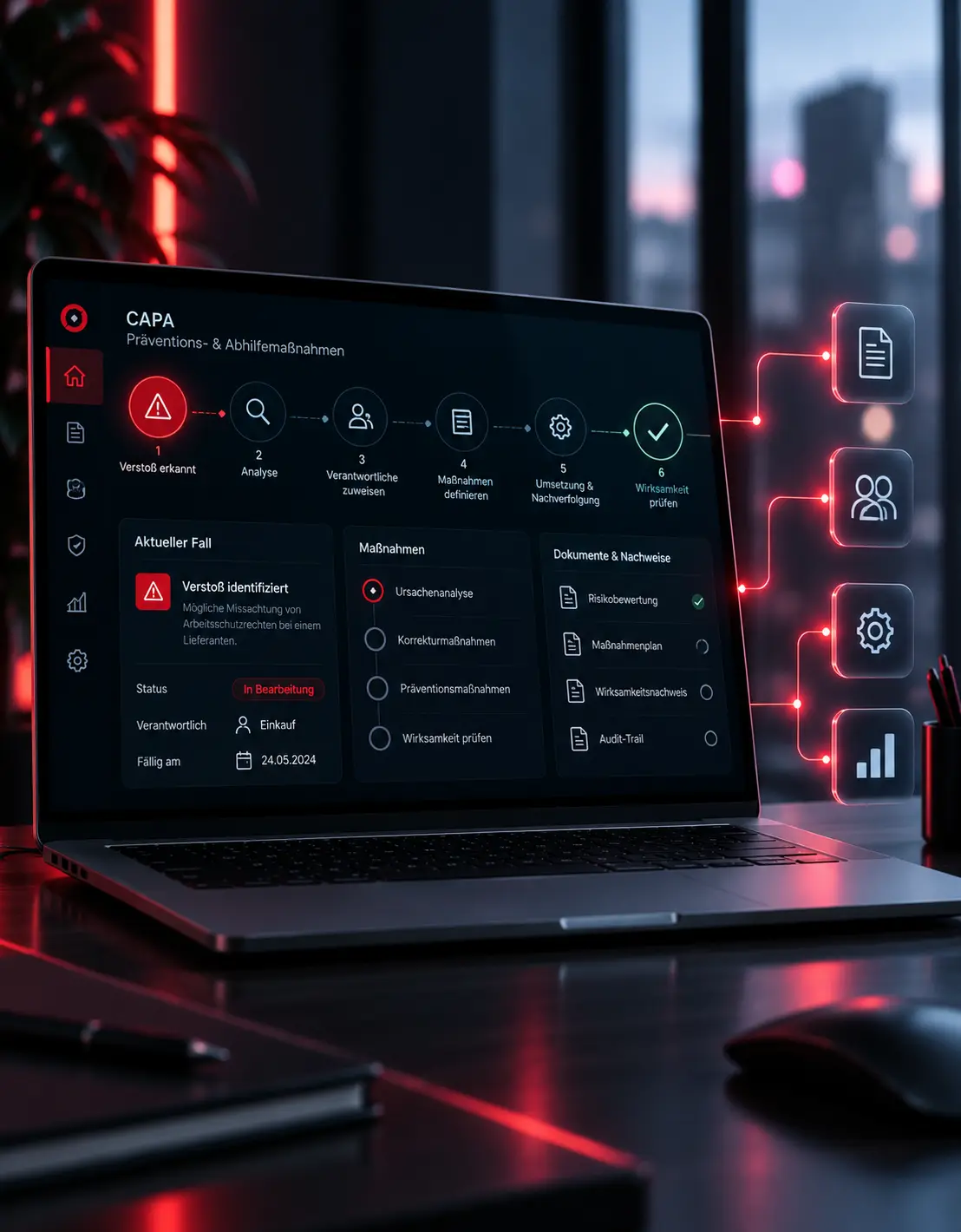
Preventive and remedial measures (CAPA)
If a supplier is found to be in violation (e.g., failure to comply with occupational safety rights), the system immediately triggers a predefined workflow. Responsibilities are assigned, measures are tracked, and their effectiveness is documented in a legally sound manner (Corrective & Preventive Actions).
- Root cause analysis
- Correction measures
- Preventive measures
- Effectiveness monitoring
Customer Benefit
Global supply chains under control – efficiency instead of paper chaos
Monitoring human rights and environmental standards for hundreds or thousands of suppliers is no longer feasible by hand. Those who rely on Excel and manual emails risk control gaps, exclusion from public tenders, and millions in fines from the BAFA.
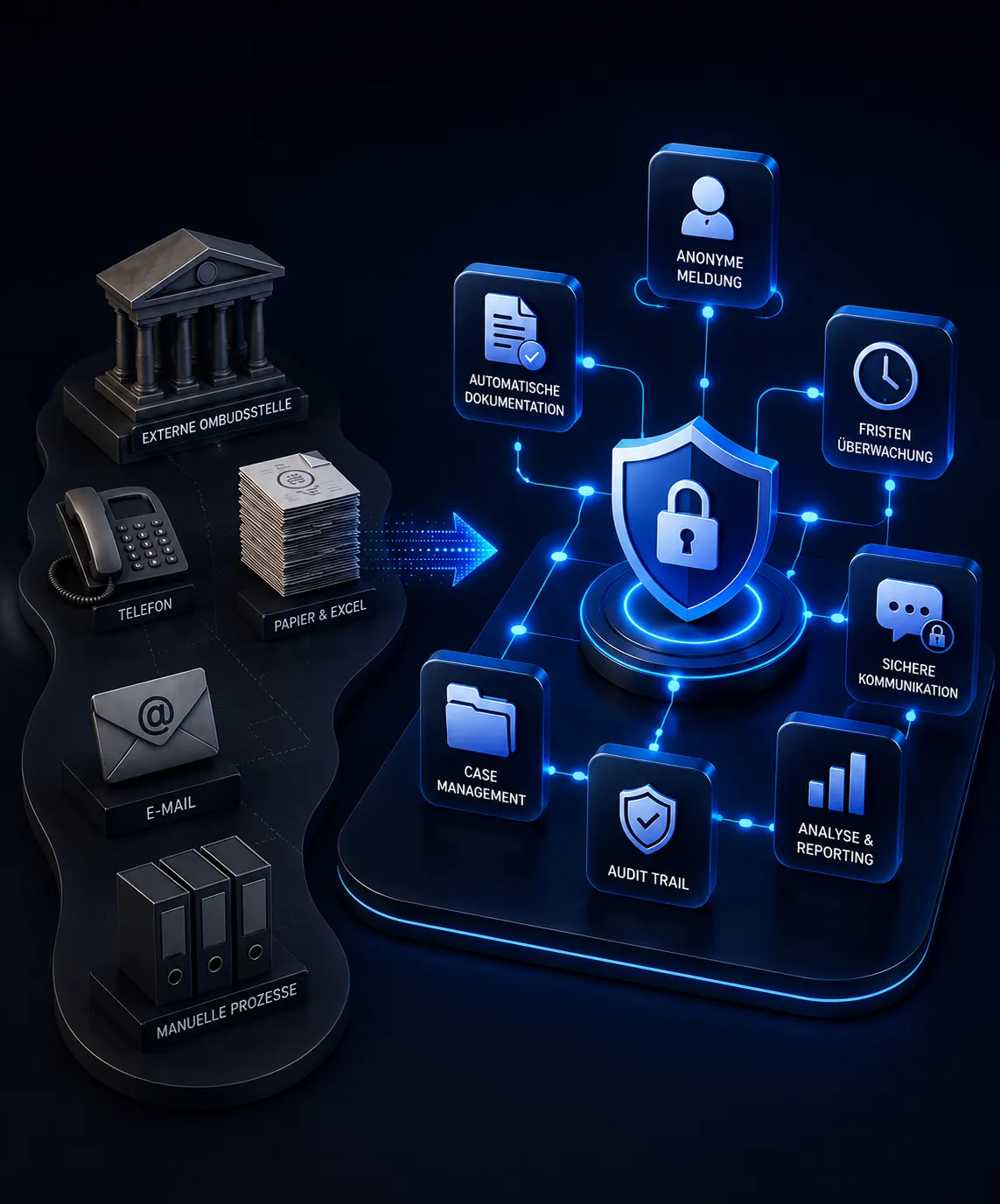
Digital LkSG compliance instead of a complaints office
Many companies still rely on external ombudsmen (e.g., law firms). The problem: They are person-dependent, expensive, often slow, and generate media gaps in documentation. A revision-proof recording of the content of reports, the timing, and the processing steps is usually not guaranteed there – just as much as genuine, technically secure anonymity in telephone or email notifications.
OPTURE LkSG, by contrast, offers a structured, auditable and fully anonymous reporting system that automatically documents all processes, monitors deadlines and reliably informs those responsible. This provides companies with a scalable, legally sound complaint process that is significantly superior to that of ombudsmen. Moreover, the internal case management ensures, without disrupting operations, a structured and efficient analysis, management and communication with the anonymous whistleblower.
Legal certainty for BAFA audits
Create the annual report fully automatically. All documents, risk scores, and complete records can be exported safely at the touch of a button in an emergency.
Up to 50 % less administrative work
With predefined workflows for prevention and corrective measures, you relieve your purchasing department and your employees of the burden of having to handle many tasks. Compliance-Department noticeable.

YOUR ADVANTAGE
Why an isolated supply chain app is too short-sighted
There are many small tools on the market that can send out supplier questionnaires. However, a critical human rights or environmental risk from a major supplier is not an isolated issue. Compliance-The issue – it jeopardizes your entire production and delivery capacity.
Does the LkSG not apply only to very large companies?
This is a dangerous misconception. While companies with a certain number of employees (>1,000 employees) are required to report directly, in practice large corporations pass on the obligations entirely to their suppliers. If you are a SME that is part of a supply chain, your large customer requires you to provide full LkSG proof. With OPTURE, you are perfectly equipped for both scenarios.
What happens if a supplier ignores the questionnaire sent?
The system eliminates the need for manual follow-up. OPTURE LkSG features automated escalation management. If a supplier does not respond within the set timeframe, the system sends automatic reminders and gradually ranks the supplier in the dashboard to a higher risk profile, until the Compliance-Department intervenes manually.
How does the LkSG module differ from a normal ESG tool?
A classic ESG-The tool usually collects CO2 data for the sustainability report. However, the LkSG requires a real, operational one. Risk management. It calls for the definition of clear preventive measures, the establishment of a functioning complaints channel, and the proof of remedial measures in the event of acute violations of human rights or environmental regulations. OPTURE LkSG actively contributes to these processes, rather than simply reporting them passively.
How does the integrated complaint process protect our data?
The complaint process runs through a highly encrypted external reporting page (see OPTURE HGS). Affected individuals worldwide can submit information – absolutely anonymously if desired –.
How complex is the data migration of our existing supplier data?
Thanks to flexible interfaces (APIs), your existing master data from ERP systems (such as SAP) or SRM tools can be easily and quickly imported into OPTURE LkSG. The software is ready to use within a few days and immediately ready for the first abstract risk analysis.
Deep Dive: The Supply Chain Due Diligence Act (LkSG) and the transition to the European CSDDD
The regulation of global value chains has reached a new level. What about the German one? Supply Chain Due Diligence Act (SCDDA) began, will be carried out by the European CSDDD (Corporate Sustainability Due Diligence Directive) placed on a still stricter legal foundation. Companies face the challenge of not only monitoring their direct suppliers but often also the deeper levels of the supply chain for human rights and environmental risks. The manual handling of these control obligations is practically no longer possible in an efficient manner.
The pillars of legal supply chain risk management
The law does not require affected companies to simply make a public declaration, but to actively and continuously manage risks. The centerpiece is the annual and occasion-based risk management plan. Risk analysis of the supply chain. In doing so, they must Companies systematically identify risks, assess them, prioritize them, and link them to appropriate prevention and mitigation measures.
- Abstract risk analysis: Suppliers are evaluated based on standardized Risk assessments are carried out for countries, sectors and product groups. These include, for example, labor law risks, corruption risks, environmental standards or human rights risk factors.
- Concrete risk analysis: Suppliers with an increased risk are subject to in-depth review, for example through questionnaires, on-site audits, document reviews, Incident evaluations or other due diligence measures.
- Action control: Risks and violations are reported Linked responsibilities, deadlines, escalations, and effectiveness tests. This creates a comprehensible, auditable processing process.
A professional LkSG Software such as OPTURE LkSG automatically performs this Mathematical and procedural linking. It prevents the purchase from having to reconcile thousands of data points manually, and instantly visualizes critical hotspots in a clear risk matrix.
The entire process – from the report to the solution
Effective supply chain risk management does not end with risk analysis. The entire process is crucial: from the identification or identification of risks, through the assessment and action planning, to implementation, follow-up, and effectiveness verification. Each phase must be documented in a way that allows companies to demonstrate to management, auditors, and authorities that they are effectively fulfilling their duty of care.
OPTURE LkSG digitally tracks this process. Notes, supplier risks, actions, responsibilities, deadlines, escalations, and evidence are compiled in a centralized system. This creates a closed case management process that links operational processing, legally sound documentation, and transparent control.
The added value: Risks are not only identified but also translated directly into concrete prevention and mitigation measures. Those responsible know what needs to be done, deadlines are monitored, and the effectiveness of the measures is documented.
System comparison: Manual tables vs. integrated RegOS architecture
| Requirement according to LkSG / CSDDD | Manual processing with Excel / E-mail | OPTURE integrated into the LkSG platform |
|---|---|---|
| Risk scoring | Subjective evaluations, scattered data sources, and high manual effort. Results are difficult to compare and hardly auditable. | Structured assessment of supplier risks with uniform criteria, automated analyses, and a transparent risk matrix. |
| Complaints procedure | Isolated email mailboxes, manual processing, and limited transparency regarding status, responsibilities, and deadlines. | Protected reporting channel with case management, two-way communication, Status tracking and auditable documentation. |
| Action control | Actions are often documented separately. Escalations, deadlines, and Effectiveness tests must be conducted manually. | Prevention and remedial measures are implemented with responsible parties, deadlines, and Escalations and efficacy testing are centrally controlled. |
| Governance & Reporting | No consistent connection to risk management, compliance, or reporting. Management transparency often does not emerge until much later. | Direct integration into the OPTURE RegOS platform with connection to ERM, Compliance, IKS and audit processes. |
The complaint procedure as an early warning system against reputational damage
An often underestimated paragraph of the Law on Supply Chain Due Diligence (§ 8 LkSG) It is a duty to establish an internal and external complaint procedure. This must enable the reporting of human rights or environmental risks, as well as violations within the own business area or in the supply chain.
If a company does not create a reliable, barrier-free and comprehensible channel for complaints, clues may be detected late or end up directly with authorities, the media or NGOs. A digital complaint procedure therefore acts as an early warning system: it makes critical developments visible before they lead to regulatory, operational or reputational damage.
The OPTURE LkSG software operationalizes this complaint process. When a report is received, it is immediately transferred to a protected case management system. The compliance team can investigate the case, initiate corrective measures, and document their effectiveness. This protects the company from external escalations and provides reliable evidence for auditors and authorities.
Strategic resilience through the RegOS platform
The true strength of OPTURE lies in overcoming software silos. A breach by a core supplier of the supply chain law can lead to production stops, inability to deliver, and massive contractual penalties. By natively embedding OPTURE LkSG into the Regulatory Operating System (RegOS) will these Risks not considered in isolation, but with risk management, compliance, Action management and reporting are integrated.
The board thus has a quick overview of which suppliers, regions, or risk categories are critical and which measures are already in place. In this way, legal compliance is transformed from an administrative duty into a tool for strategic corporate resilience.